Common Sage Seed Pod
A staple of the herb garden.
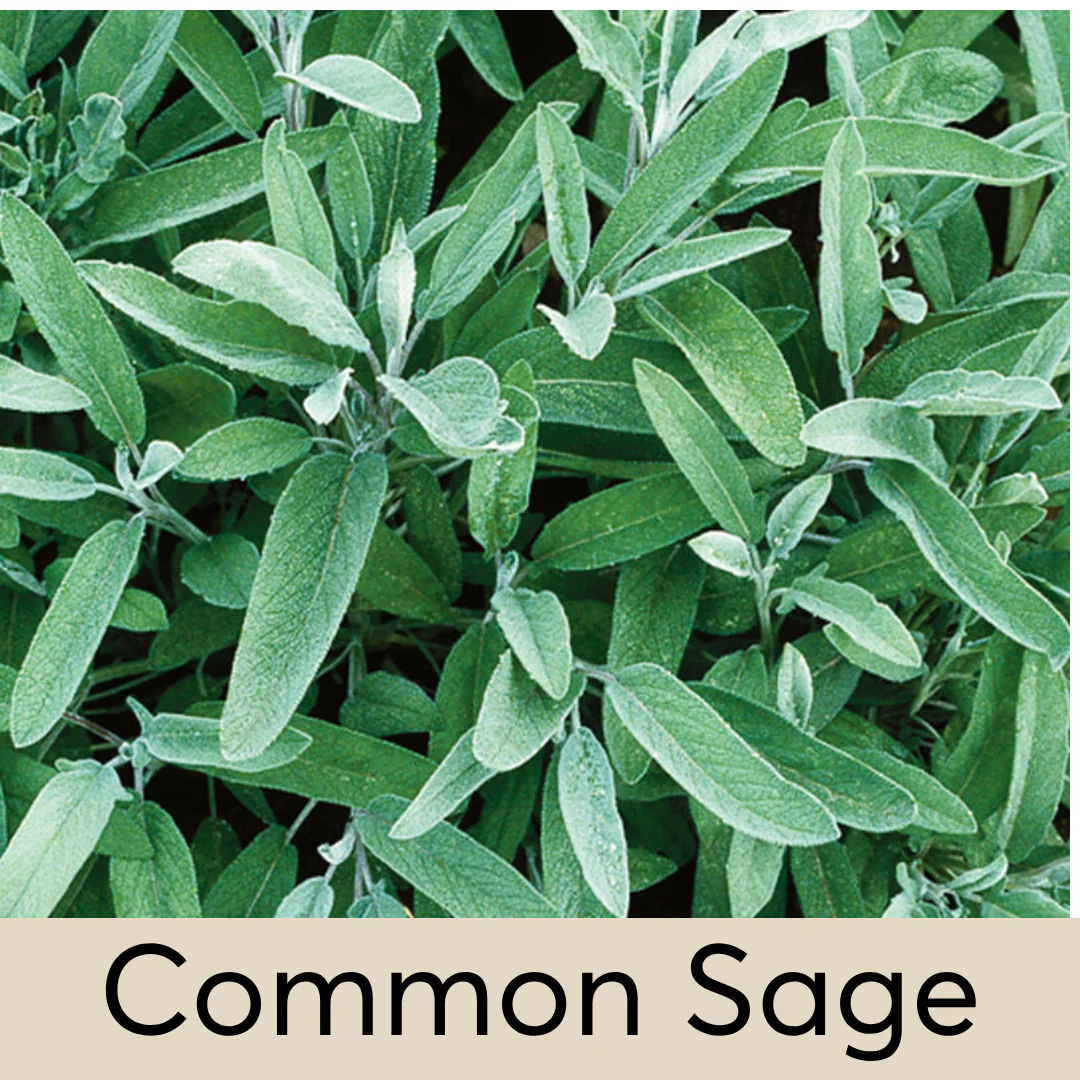
Wide variety of culinary uses. Dusty green leaves are used in dressing, sauces, salted herbs, sausage, and tea. Makes a good base for dried floral wreaths. Medicinal: Leaves are used as digestive and nerve tonics. Also known as garden sage. Perennial in Zones 4–8.
- Edible Flowers: Lovely small lavender flowers appear in early summer with a mild and sage-like flavor. Flower spikes can be battered and fried, cooked in rice, egg, or cheese dishes, or used to garnish salads and pizza.
USDA Certified Organic.
Grow Port: Standard
Ideal Growing Temperature: 65–70°F
Seed to Harvest: 80 - 90 days
A staple of the herb garden.
Wide variety of culinary uses. Dusty green leaves are used in dressing, sauces, salted herbs, sausage, and tea. Makes a good base for dried floral wreaths. Medicinal: Leaves are used as digestive and nerve tonics. Also known as garden sage. Perennial in Zones 4–8.
- Edible Flowers: Lovely small lavender flowers appear in early summer with a mild and sage-like flavor. Flower spikes can be battered and fried, cooked in rice, egg, or cheese dishes, or used to garnish salads and pizza.
USDA Certified Organic.
Grow Port: Standard
Ideal Growing Temperature: 65–70°F
Seed to Harvest: 80 - 90 days
Original: $3.50
-65%$3.50
$1.22Description
A staple of the herb garden.
Wide variety of culinary uses. Dusty green leaves are used in dressing, sauces, salted herbs, sausage, and tea. Makes a good base for dried floral wreaths. Medicinal: Leaves are used as digestive and nerve tonics. Also known as garden sage. Perennial in Zones 4–8.
- Edible Flowers: Lovely small lavender flowers appear in early summer with a mild and sage-like flavor. Flower spikes can be battered and fried, cooked in rice, egg, or cheese dishes, or used to garnish salads and pizza.
USDA Certified Organic.
Grow Port: Standard
Ideal Growing Temperature: 65–70°F
Seed to Harvest: 80 - 90 days